









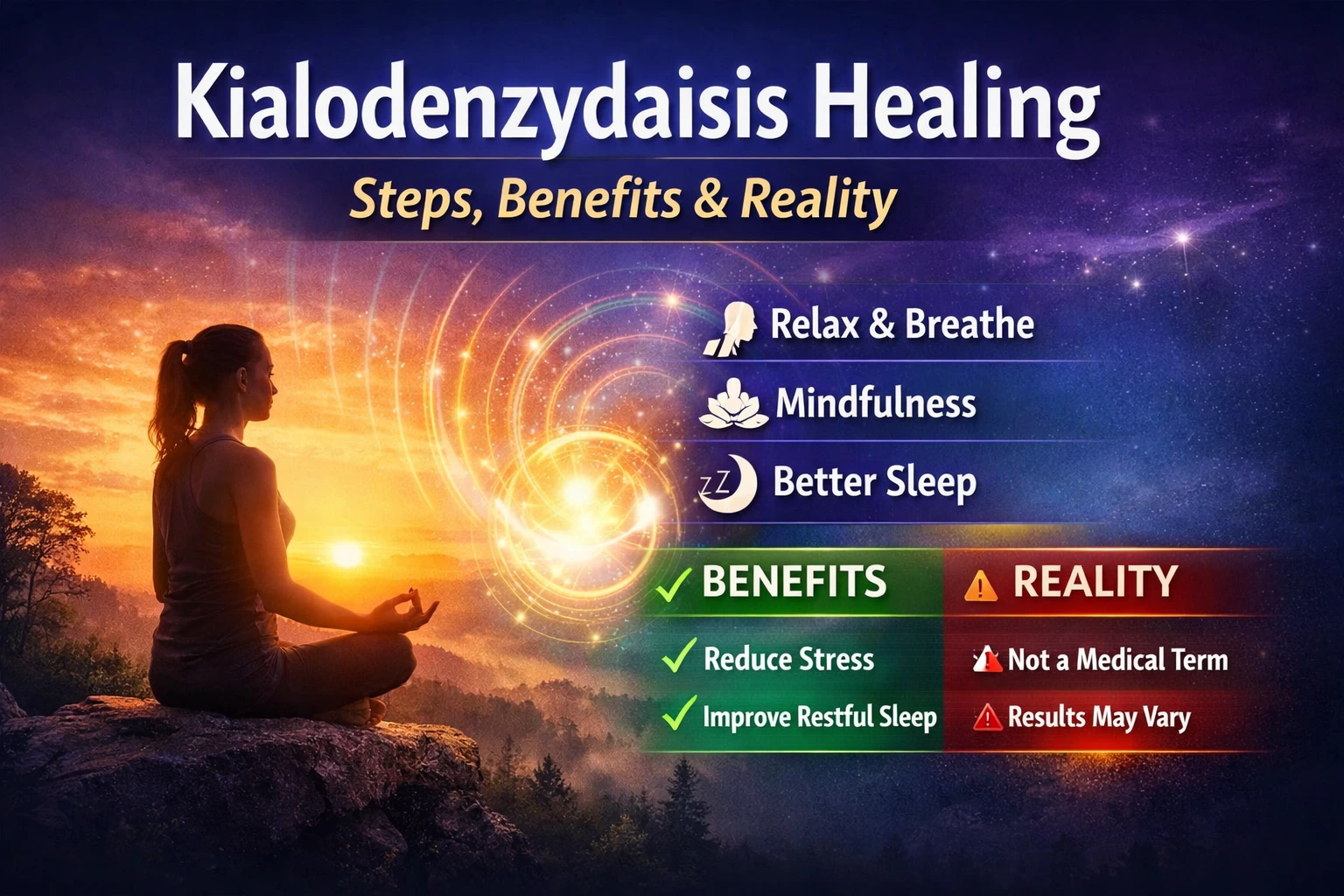
Kialodenzydaisis healing is an online wellness phrase used to describe calming, restorative, and self-regulation practices. It is not a clearly recognized medical diagnosis or standardized clinical treatment. The term appears mostly in blog-style wellness content, where different pages connect it with energy balance, stress relief, emotional reset, natural healing, or mind-body recovery.
That mixed meaning is important. Some readers search this phrase because they want a simple definition. Others want to know whether it is real, safe, or medically proven. The most responsible answer is that kialodenzydaisis healing should be understood as a loose wellness label, not as a replacement for medical care.
At its safest, the phrase can be used as a practical self-care framework built around breathing, relaxation, mindfulness, sleep hygiene, journaling, gentle movement, and routine. Those practices are already familiar in stress-management and general wellbeing guidance. The label may be unusual, but the useful parts behind it are simple and grounded.
What Is Kialodenzydaisis Healing?
Kialodenzydaisis healing refers to a non-standard wellness concept focused on restoring calm, balance, and daily rhythm. Online explanations do not agree on one exact definition. Some describe it as emotional or spiritual healing. Others connect it with natural health, stress recovery, energy work, or lifestyle improvement.
Because the term is not standardized, it should not be treated like a formal medical condition. There is no clear public evidence that it belongs to an established diagnostic category. It is better understood as a broad internet wellness phrase used to describe practices that may help people slow down, reduce overwhelm, and build healthier routines.
In plain English, it means this: a calming self-care approach that may include breathwork, mindfulness, rest, reflection, and lifestyle balance.
The phrase itself is less important than the habits attached to it. If someone uses it as a reminder to sleep better, breathe more slowly, reduce stress, and create a more stable routine, it can have practical value. If someone presents it as a cure for serious symptoms, that becomes unsafe and misleading.
Is Kialodenzydaisis Healing a Real Medical Treatment?
No, it should not be presented as a proven medical treatment.
The term does not appear to have a settled clinical meaning. It is not widely recognized like anxiety, insomnia, chronic fatigue, inflammation, autoimmune disease, or other established medical terms. Some online pages make strong claims about symptoms, causes, inflammation, immunity, or recovery, but those claims should be treated carefully unless supported by credible medical evidence.
This does not mean every practice connected with the phrase is useless. Deep breathing, relaxation, mindfulness, better sleep habits, regular movement, and emotional reflection can support wellbeing for many people. The issue is the label, not necessarily every habit behind it.
A safe way to explain it is:
Kialodenzydaisis healing is not a medical cure. It is a wellness-style phrase that can be used to describe supportive practices for stress reduction, emotional balance, rest, and routine.
That distinction protects readers from false hope and helps your article stay more trustworthy.
Why People Search for This Term
People usually search this keyword for one of four reasons.
First, they see the phrase online and want to know what it means. Because the word looks technical, it can sound like a real condition even when the available explanations are unclear.
Second, some readers may be looking for natural healing methods. They may feel tired, stressed, emotionally drained, or mentally overloaded and want a gentle routine that feels manageable.
Third, people may be checking whether the term is legitimate. This is an important search intent because wellness content often mixes useful advice with unsupported claims.
Fourth, some users may be looking for practical steps. They do not only want a definition. They want to know what to do safely.
A strong article should answer all four intents: meaning, credibility, safety, and practical use.
How Kialodenzydaisis Healing Is Usually Described Online
Most online explanations connect the phrase with one or more of these ideas:
- Energy balance
- Emotional reset
- Stress relief
- Mind-body harmony
- Natural healing
- Nervous system calming
- Sleep support
- Breathing and meditation
- Lifestyle improvement
- Inner clarity
These ideas are broad. Some are spiritual, some are psychological, and some are lifestyle-based. That is why the phrase can feel confusing.
The safest interpretation is to separate the unclear label from the practical behaviors. You do not need to believe in a vague healing system to benefit from better sleep, slower breathing, quiet reflection, or less daily stimulation.
Core Components of a Safe Kialodenzydaisis Healing Routine
A responsible routine should avoid extreme claims. It should focus on simple habits that support calm and daily stability.
1. Breathwork
Breathwork is one of the easiest calming practices to start. Slow breathing can help the body shift away from a high-stress state. It does not require equipment, special training, or a long session.
A simple method is to sit quietly, inhale slowly, pause briefly, and exhale gently. The goal is not to force the breath. The goal is to slow the rhythm and give the body a signal of safety.
Start with two to five minutes. If you feel dizzy, stop and return to normal breathing.
2. Relaxation Techniques
Relaxation can include deep breathing, progressive muscle relaxation, guided imagery, quiet stretching, or gentle body scanning. These methods are often used to reduce tension and help the mind settle.
Progressive muscle relaxation is especially simple. You tighten one muscle group for a few seconds, release it, and notice the difference. This can help people become more aware of physical stress stored in the body.
3. Mindfulness
Mindfulness means paying attention to the present moment without rushing to react. It does not require emptying the mind. It simply means noticing thoughts, feelings, breathing, or body sensations with more awareness.
For people using kialodenzydaisis healing as a calming routine, mindfulness can be useful because it reduces automatic stress reactions. Instead of immediately responding to every worry, you learn to observe it and let it pass.
4. Sleep Hygiene
Sleep is one of the most important parts of any restorative wellness routine. Poor sleep can affect mood, concentration, energy, appetite, and daily performance.
A safe routine should include basic sleep hygiene:
- Keep a regular bedtime and wake time.
- Reduce screens close to bedtime.
- Keep the room dark, quiet, and comfortable.
- Avoid heavy meals late at night.
- Use a short wind-down routine before bed.
- Avoid forcing sleep when your mind is too active.
Better sleep does not fix every problem, but it often makes stress easier to manage.
5. Emotional Reflection
Many people feel stuck because they never pause long enough to understand what is draining them. Reflection can help identify repeated stress patterns, emotional triggers, and habits that increase overwhelm.
This can be done through journaling, quiet thinking, voice notes, or guided questions.
Useful prompts include:
- What made me feel tense today?
- What helped me feel calm?
- What am I avoiding?
- What do I need less of this week?
- What is one small action that would make tomorrow easier?
The point is not to judge yourself. The point is to notice patterns clearly.
6. Gentle Movement
Movement helps release physical tension and supports overall wellbeing. This does not need to be intense exercise. Walking, stretching, yoga-style movement, or light mobility work can be enough for a daily reset.
For a calming routine, the goal is consistency rather than intensity. Ten minutes of gentle movement every day is usually more sustainable than one extreme session that you never repeat.
7. Routine and Boundaries
A wellness routine works better when daily life supports it. If your schedule is overloaded, your phone is always on, and you never create quiet time, no healing label will solve the problem.
Healthy boundaries may include:
- A fixed sleep window
- A short evening screen break
- Fewer unnecessary commitments
- A calmer morning routine
- Scheduled breaks during work
- Less multitasking
- More realistic expectations
This is where the concept becomes practical. It is not about one dramatic healing moment. It is about building a calmer daily rhythm.
Read more: How Painful Is Kialodenzydaisis?
A Simple 7-Day Kialodenzydaisis Healing Plan
This plan uses the phrase as a safe self-care framework, not as medical treatment.
Day 1: Reset Your Breathing
Practice slow breathing for five minutes. Sit comfortably, inhale gently, and exhale longer than you inhale. Do not force anything.
Day 2: Reduce Stimulation
Choose one hour in the evening without social media, news, or unnecessary scrolling. Use that time to stretch, read, walk, or sit quietly.
Day 3: Start a Sleep Routine
Go to bed and wake up at consistent times. Keep your room darker and reduce screen exposure before sleep.
Day 4: Try Mindful Observation
Spend five minutes noticing your breathing, body, and thoughts. When the mind wanders, return attention to the present moment.
Day 5: Add Gentle Movement
Take a short walk or do light stretching. Keep it easy enough that you can repeat it tomorrow.
Day 6: Journal the Pattern
Write down what has been draining your energy. Then write one small boundary that could reduce that pressure.
Day 7: Review and Simplify
Look back at the week. Keep the two habits that helped most. Remove anything that felt forced or complicated.
This type of plan works because it is realistic. It does not promise instant transformation. It builds a stable base.
Possible Benefits
The potential benefits come from the practices, not from the name itself.
Lower Daily Stress
Breathing, relaxation, and mindfulness can help some people feel calmer. These practices create a pause between stress and reaction.
Better Sleep Routine
A structured wind-down routine may help people prepare for sleep. This can be especially useful for those whose minds stay active at night.
Improved Emotional Awareness
Journaling and reflection can help people understand what is causing pressure. Awareness makes it easier to change patterns.
More Consistency
A simple routine gives the day more structure. This is helpful for people who feel scattered, overstimulated, or mentally overloaded.
Better Self-Regulation
Self-regulation means learning how to calm yourself without depending only on external fixes. Breathwork, pauses, movement, and boundaries can all support this skill.
Important Limitations
The biggest limitation is unclear meaning. Because the phrase is used differently across websites, readers should be careful with any page that makes strong promises.
Another limitation is that wellness routines cannot diagnose or treat serious medical conditions. If someone has persistent fatigue, pain, shortness of breath, panic attacks, severe insomnia, unexplained weight changes, or ongoing low mood, they should seek proper professional advice.
There is also a risk of delay. Some people try natural routines for too long while ignoring symptoms that need medical attention. Self-care is useful, but it should not become a reason to avoid help.
Finally, some online content may overstate results. Be cautious with claims such as “guaranteed healing,” “complete cure,” “detoxes the body,” or “reverses disease” unless supported by credible evidence.
Kialodenzydaisis Healing vs Evidence-Based Self-Care
The best comparison is not spiritual healing versus medicine. A better comparison is vague wellness claims versus practical self-care.
| Area | Vague Wellness Claim | Safer Self-Care Approach |
|---|---|---|
| Stress | “Remove all negative energy” | Practice breathing, relaxation, and boundaries |
| Sleep | “Heal your sleep instantly” | Build consistent sleep hygiene |
| Emotions | “Release blocked trauma quickly” | Use journaling, mindfulness, and professional support when needed |
| Energy | “Restore your natural frequency” | Improve rest, movement, food, hydration, and workload |
| Health | “Cure the root cause naturally” | Use self-care as support, not as a medical replacement |
This comparison makes the concept more trustworthy. Readers can keep the useful parts while avoiding unsupported claims.
Who May Find This Helpful?
This routine may help people who feel:
- Mentally overloaded
- Stressed after work
- Emotionally drained
- Restless before sleep
- Stuck in constant screen use
- Disconnected from routine
- Tense from daily pressure
- In need of a simple calming practice
It is most useful for general wellbeing and stress support. It is not enough for serious, persistent, or unexplained symptoms.
When to Seek Professional Help
Do not rely only on a wellness routine if symptoms are ongoing or disruptive.
Consider speaking with a qualified professional if you have:
- Severe or persistent anxiety
- Long-term insomnia
- Ongoing fatigue that does not improve with rest
- Chest pain or breathing difficulty
- Unexplained pain
- Sudden mood changes
- Thoughts of self-harm
- Symptoms that affect work, study, or relationships
- Any condition that is getting worse
A calming routine can support wellbeing, but it should not replace medical evaluation when symptoms need proper care.
Common Mistakes
Treating the Term as a Diagnosis
This is the biggest mistake. The phrase should not be used as a formal disease name unless credible medical sources establish it clearly.
Expecting Quick Healing
Relaxation and routine work gradually. They are habits, not instant cures.
Following Extreme Advice
Avoid any routine that asks you to stop prescribed medicine, ignore symptoms, buy expensive “cures,” or follow strict detox claims.
Doing Too Much at Once
A long routine can become stressful. Start with one or two habits and build slowly.
Ignoring Sleep
Many people focus on advanced wellness ideas while ignoring basic sleep habits. Rest is often the foundation.
Practical Best Practices
Keep the routine short. Five to ten minutes daily is better than a complicated plan you cannot maintain.
Use plain tracking. Rate your stress from 1 to 10, note your sleep time, and write down what helped.
Make your environment calmer. Reduce noise, clutter, and late-night stimulation where possible.
Pair the habit with something you already do. For example, breathe for two minutes after brushing your teeth or journal for three minutes before bed.
Stay realistic. The goal is not perfect peace. The goal is better regulation, more rest, and fewer avoidable stress triggers.
Final Thoughts
Kialodenzydaisis healing is best understood as a non-standard wellness phrase, not a medical diagnosis or proven treatment. Its safest meaning is a calming routine built around breathwork, relaxation, mindfulness, sleep hygiene, movement, reflection, and better daily boundaries.
The useful part is not the unusual name. The useful part is the structure it can give to ordinary self-care. When used responsibly, it can help people slow down, reduce stress, and create a steadier rhythm. When used carelessly, it can create confusion or false expectations.
Use the concept as a support tool. Keep the claims modest, the routine simple, and the medical caution clear.
FAQs
What does Kialodenzydaisis healing mean?
Kialodenzydaisis healing is a non-standard online wellness phrase used to describe calming and restorative practices such as breathing, relaxation, mindfulness, sleep support, journaling, and emotional reset.
Is Kialodenzydaisis healing a real medical treatment?
No. It should not be presented as a proven medical treatment. It is better understood as a wellness concept or self-care framework.
Is Kialodenzydaisis a recognized disease?
There is no clear mainstream medical recognition of the term as a formal disease or diagnosis. Online sources use it inconsistently.
Can it help with stress?
The label itself is not proven, but some practices connected with it, such as breathing, relaxation, mindfulness, and better sleep habits, may help people manage everyday stress.
Can it help with sleep?
A routine that includes relaxation, less screen time, a regular bedtime, and mindfulness may support better sleep habits. It should not replace medical advice for serious or long-term insomnia.
What practices are usually included?
Common practices include deep breathing, meditation, journaling, gentle movement, sleep hygiene, emotional reflection, and reducing overstimulation.
Is it spiritual or practical?
It depends on how the writer uses the term. Some describe it spiritually, while a safer interpretation treats it as a practical self-care routine.
Should I use it instead of seeing a doctor?
No. If symptoms are persistent, severe, unexplained, or affecting daily life, professional medical advice is important.
How long does it take to work?
There is no fixed timeline. Simple calming routines usually work best when practiced consistently over days and weeks.
What is the safest way to use it?
Use it as a support framework for rest, stress management, and daily balance. Avoid treating it as a cure or diagnosis.