








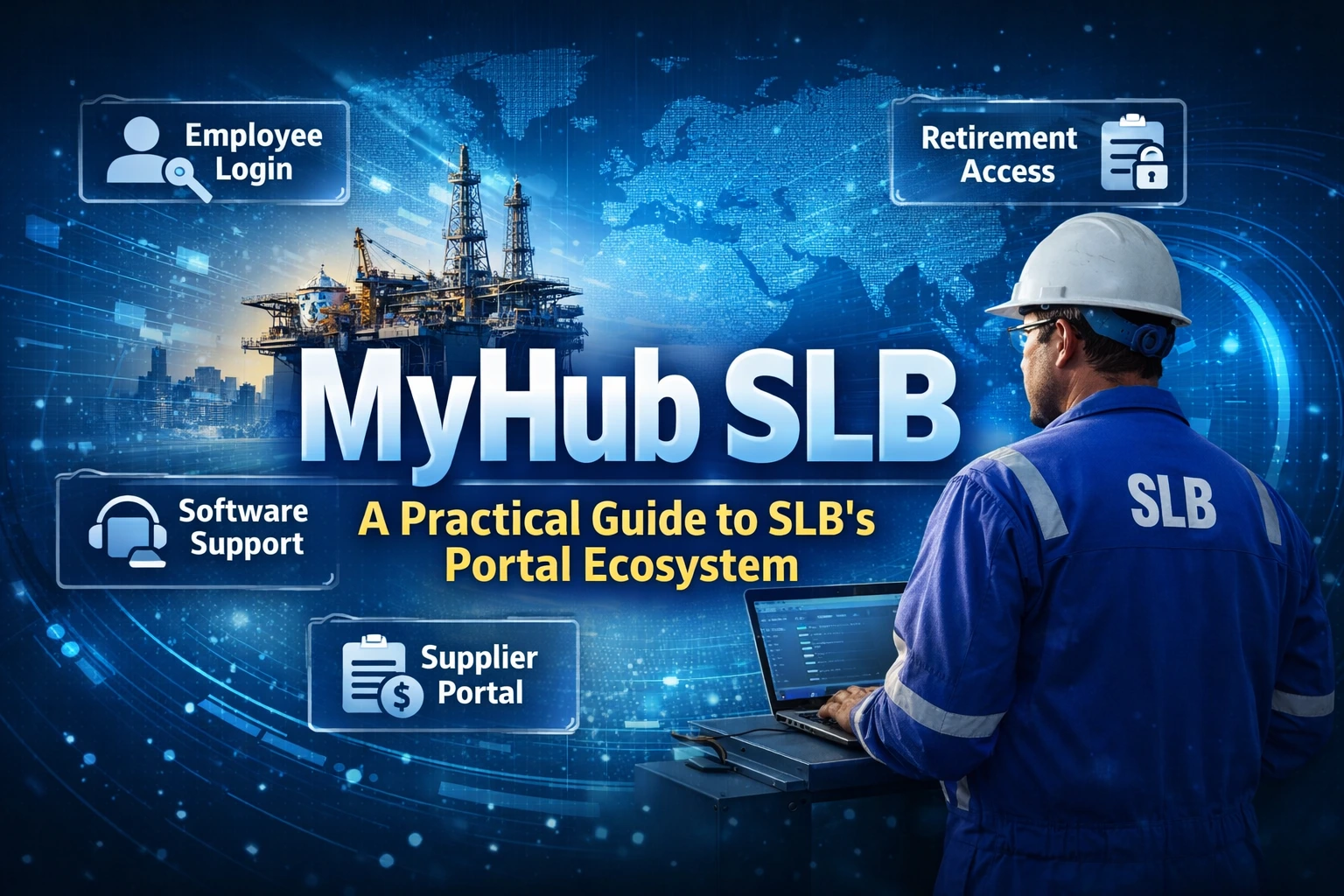
If you searched for myhub slb, you are probably trying to log in, find the right portal, or understand what this system is used for. The public web does not expose a full product brochure for “MyHub SLB,” but SLB’s official pages clearly show a connected set of authenticated services for employees, software support users, suppliers, and retirees. That makes it reasonable to treat MyHub SLB as part of SLB’s broader digital access environment rather than a single public website with one fixed purpose.
What is MyHub SLB?
MyHub SLB appears to be part of SLB’s internal digital access ecosystem, used to reach employee and work-related services. Public SLB pages show portals for employee login, software support, supplier invoices, and retirement access, suggesting a centralized hub for authenticated resources. Public details are limited, so official SLB pages are the safest reference.
In simple terms, MyHub SLB is best understood as a login and access entry point for SLB-related digital services. SLB is a global technology company focused on energy innovation, and its website includes public entry points for employee access, software support, premium content, careers, and other internal or semi-internal services. Public search results also show separate SLB pages for employee access, supplier invoice status, retirement portal access, and software support registration.
That matters because people often search for a portal name expecting one single dashboard, when the reality is usually a group of connected portals. In SLB’s case, the public evidence suggests a system built around authenticated access, role-based permissions, and support tools for different user groups.
How MyHub SLB works
The exact internal workflow for MyHub SLB is not fully public, but SLB’s official support pages show how its portal-style systems generally operate. For software support, users are told to click the support login link, authenticate their details, and wait for access approval by email. The same support page also explains password rules, verification codes, and multi-factor authentication.
A typical flow looks like this:
- Enter your work email or registered email address. SLB’s login pages and portal help pages consistently use email-based authentication.
- Complete authentication. Depending on the portal, this may involve a password, a verification code, or identity validation.
- Pass MFA or security checks. SLB’s support documentation specifically mentions multi-factor authentication for support and related portal access.
- Access approved resources. After approval, users can reach the tools or pages assigned to them, such as support tickets, invoice status, retirement details, or employee resources.
That step-by-step model is the most useful way to think about MyHub SLB because it matches how SLB’s own portal ecosystem is presented publicly.
Key features and components
1) Role-based access
SLB’s public pages suggest that different users see different tools. Employees, software customers, suppliers, and retirement users are each directed to separate access paths. That is a classic sign of a role-based portal structure.
2) Authentication and security
SLB’s support pages mention verification codes, password requirements, and multi-factor authentication. The retirement portal also uses registration steps and secure login with a personal email address and GIN number.
3) Self-service support
SLB’s software support system is designed for users to submit, update, and track tickets, chat with technical experts, schedule remote sessions, and exchange data securely. That is a strong signal that the portal is meant to reduce friction and shorten support cycles.
4) Business process access
The My Supplier Portal page says it is used to submit or view invoice status. That shows SLB uses portal-based workflows not only for employees, but also for external business operations.
5) Employee and benefits access
SLB has a public employee access page and a retirement portal, plus a benefits fair page for employees and dependents. Together, these pages show that SLB uses digital access points to support work life, benefits, and long-term employee needs.
Benefits of MyHub SLB
The biggest benefit is convenience. Instead of hunting through separate systems, users can follow one authenticated path into the right service. In enterprise environments, that reduces confusion and saves time. SLB’s portfolio of support pages strongly suggests this kind of centralization.
A second benefit is security. Password rules, verification codes, and MFA are all signs that SLB takes portal access seriously. For a global company that works across software, operations, suppliers, and employee services, that kind of protection is essential.
A third benefit is operational clarity. Supplier invoice status, retirement access, and support ticketing are very different tasks, yet they all need clear workflows. Portal systems make those workflows easier to manage and easier to audit.
Drawbacks and limitations
The main drawback is that public information is fragmented. SLB exposes several official login and help pages, but it does not publish a single public explanation that fully defines “MyHub SLB.” That means new users can feel unsure about whether they are in the right place.
Another limitation is access control. These portals are not built for open browsing. Some require approval, some are tied to company email addresses, and some are only available to specific user groups. That is good for security, but it can slow down onboarding.
A third drawback is that portal ecosystems often create search confusion. A person searching “myhub slb” may really mean employee login, retirement access, software support, or supplier invoicing. In practice, the keyword covers more than one user journey.
Real-world applications and use cases
MyHub SLB-style access is useful in several everyday situations.
Employees may use it to reach internal resources, benefits information, or other work-related services through SLB’s employee access environment.
Technical users may use SLB’s software support portal to submit tickets, track issues, or download software updates and release documents.
Suppliers may use SLB’s supplier portal to view or submit invoice-related information.
Retirees and future retirees may use the retirement portal to register, authenticate, and manage retirement-related access.
Human resources contact flows also show that SLB routes users to the right help channel through structured online categories rather than informal back-and-forth.
Read more: Financeville CraigScottCapital: What It Really Means
Comparison: MyHub SLB vs. other SLB portals
A useful way to understand MyHub SLB is to compare it with SLB’s other public portals.
| Portal type | Main purpose | Best for |
|---|---|---|
| Employee access | Internal employee resources | Staff members and internal users |
| Software support | Tickets, downloads, remote help | Technical customers and software users |
| Supplier portal | Invoice status | Vendors and suppliers |
| Retirement portal | Retirement registration and login | Former employees and retirement users |
The key difference is that “MyHub SLB” feels like the umbrella concept, while the pages above are the practical destinations underneath it. That is an inference based on the way SLB organizes its public access points, not a formally published definition from SLB.
Common mistakes and misconceptions
One common mistake is assuming there is a single public “MyHub SLB” homepage with every feature listed. The public web does not show that. Instead, it shows several separate but related SLB access points.
Another mistake is using the wrong login page. Someone looking for invoice status, for example, may not need the employee portal at all. A supplier should use the supplier route, while an employee should use the employee route.
A third misconception is treating every portal like a public website. SLB’s support pages show that access can require authentication, verification, and approval. In other words, the portal is built for controlled access, not open exploration.
Expert tips for using MyHub SLB more effectively
First, start with the purpose, not the keyword. Ask: “Am I trying to access employee resources, software support, supplier invoices, or retirement tools?” That simple question will save time and reduce login mistakes. The public SLB pages are organized exactly that way.
Second, use the official SLB help pages when authentication fails. The software support help page includes guidance for verification codes, password resets, new email addresses, changing employers, and multi-factor authentication. That makes it the safest source for troubleshooting.
Third, keep your registered email details current. SLB’s retirement portal explicitly uses the registered personal email address, and the support page explains what to do when a company email changes. That tells you email hygiene matters in the SLB ecosystem.
Fourth, do not ignore security prompts. If a portal asks for MFA or a verification code, that is part of the intended access flow, not a glitch.
Future trends and likely updates
SLB presents itself as a global technology company focused on digital innovation, AI-driven solutions, and delivering digital at scale. Based on that public direction, it is reasonable to infer that its portal ecosystem will continue to move toward more self-service, more secure authentication, and smoother digital workflows.
That likely means more emphasis on mobile-friendly access, centralized identity management, and faster support journeys across employee and business portals. This is an inference from SLB’s public digital positioning, not a published roadmap for MyHub SLB specifically.
Conclusion
MyHub SLB is best understood as part of SLB’s wider authenticated access ecosystem. Public SLB pages show employee login, software support, supplier invoice tools, and retirement access, all of which point to a structured portal environment built around security and self-service.
The practical takeaway is simple: use the portal that matches your purpose, rely on official SLB support pages for login issues, and treat authentication steps as part of the normal process. That is the fastest way to avoid confusion and reach the right resource.
FAQs
1) What is MyHub SLB used for?
MyHub SLB appears to be part of SLB’s digital access environment for employees and related users. Public SLB pages show portals for employee access, software support, supplier invoices, and retirement services.
2) Is MyHub SLB an official SLB portal?
The public web does not show a single official page titled exactly “MyHub SLB,” but SLB does provide official authenticated portals and login pages that appear connected to that search term.
3) How do I log in to SLB support services?
SLB’s support help page says users should click the support login link, authenticate their details, and complete approval steps. The page also describes password reset, verification code, and MFA workflows.
4) Can suppliers use SLB portals too?
Yes. SLB’s My Supplier Portal page is specifically for submitting or viewing invoice status.
5) Does SLB use multi-factor authentication?
Yes. SLB’s software support help page explicitly mentions multi-factor authentication as part of the standard registration and login process.
6) What should I do if my login is not working?
Use the official SLB support help page. It includes instructions for forgotten passwords, verification codes, email changes, and registration issues.
7) Why is MyHub SLB hard to find in search results?
Because SLB appears to split its access into several purpose-built portals rather than one publicly documented “MyHub” homepage. That creates search overlap between employee, support, supplier, and retirement access pages