







Some search terms appear because a real medical condition is being discussed. Others appear because the web itself keeps repeating a phrase until it starts to look established. Kialodenzydaisis healing fits the second pattern. In the search results I found, the term shows up mostly on blog-style wellness pages and one branded site, where it is described with language about energy, balance, grounding, stress relief, and emotional reset.
That matters for two reasons. First, readers deserve clarity instead of vague spiritual promises. Second, searchers who land on this topic usually want something practical: what the term means, whether it is credible, and what they can safely do with the idea. This guide answers those questions directly and keeps the advice grounded in established wellness practices like breathing, relaxation, mindfulness, and sleep hygiene.
What is kialodenzydaisis healing?
At a practical level, the phrase is used online to describe a holistic reset. The pages using the term do not agree on one strict definition. Some present it as spiritual alignment. Others frame it as a mind-body wellness routine. A few mix both ideas. That inconsistency suggests there is no standardized clinical protocol behind the term.
If you strip away the branding, the idea usually includes a few familiar elements: slowing down, regulating stress, supporting sleep, paying attention to breathing, reducing overwhelm, and creating a calmer daily rhythm. Those ideas are not unique to this phrase. They are common components of evidence-based relaxation and stress-management approaches.
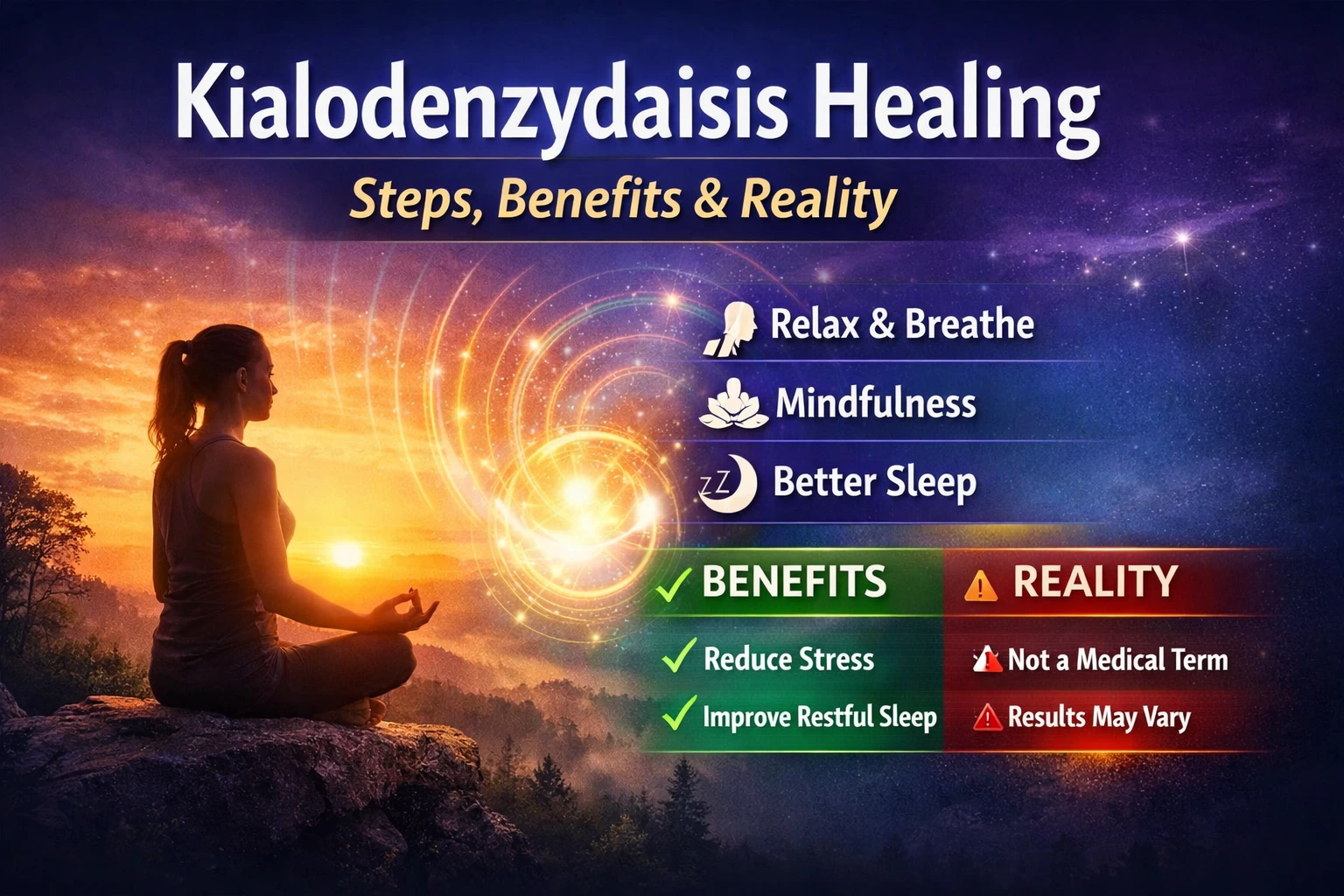
So the most honest way to define it is this: kialodenzydaisis healing is an internet wellness label for a loose set of calming, restorative practices. It is not a recognized diagnosis in mainstream medical references based on the searches I ran, and the term is used far more as a content keyword than a medical category.
How it works
Because the term is not standardized, “how it works” depends on how the writer is using it. In the sources I found, the structure usually looks like this: reduce stress, calm the nervous system, improve sleep, and build a steadier routine. That approach matches well-known self-care methods that can lower perceived stress and support relaxation.
A simple version of the process looks like this:
- Pause the stress cycle. Step away from stimulation and constant multitasking.
- Use breathing or relaxation. Deep breathing and related techniques are commonly used to reduce stress.
- Add a calming practice. Mindfulness, meditation, yoga, or guided relaxation may help some people manage stress and sleep issues.
- Stabilize sleep and routine. Better sleep habits often help tiredness and insomnia.
- Repeat daily. The main value comes from consistency, not intensity.
That is the real core of it. The “healing” in this context is less about a dramatic event and more about restoring rhythm.
Key components often associated with the term
The online content around this keyword keeps returning to a small set of ideas. These are the components most often attached to it.
1) Breathwork and relaxation
Breathing exercises are one of the simplest ways to relax. MedlinePlus and NIH-linked sources describe deep breathing and other relaxation techniques as practical tools for reducing stress. Research also supports the idea that regulated breathing practices can reduce stress and anxiety.
2) Mindfulness and meditation
Mindfulness and meditation are frequently discussed in the same wellness space because they help people notice stress without immediately reacting to it. NCCIH notes that mindfulness-based approaches may help with stress, anxiety, depression, insomnia, and some other conditions, although results vary by condition and study quality.
3) Sleep hygiene
Many people who search for a “healing” method are really looking for better rest. The NHS recommends regular sleep habits, a restful bedroom, and relaxation or mindfulness practices to improve sleep. It also notes that changing sleeping habits often helps with insomnia.
4) Nutrition and energy support
Some pages using the term add nutrition advice, but the evidence-based version of this idea is simple: healthy eating, regular movement, and reduced excess alcohol can help energy and stress management. MedlinePlus and NIH-linked sources describe nutrition and exercise as common parts of effective stress-management strategies.
5) Emotional reflection
Several of the pages frame the practice as emotional release or self-awareness. That is not a medical claim; it is a wellness approach. In practical terms, reflection helps people notice patterns, triggers, and habits that keep them stuck. That can be valuable even when the label itself is not clinically defined.
Benefits vs. drawbacks
A useful article should not pretend a method is perfect. The real value lies in the trade-offs.
Possible benefits
The strongest benefit is that the routine can be simple and calming. If someone uses the term as a reminder to breathe, rest, slow down, and create healthier habits, the result may be lower stress and better sleep quality. Those outcomes are consistent with established relaxation and sleep guidance.
Another benefit is accessibility. You do not need special equipment to practice breathwork, mindfulness, or sleep hygiene. You can start with a chair, a notebook, or five quiet minutes.
Important drawbacks
The biggest drawback is uncertainty. Because the term is not standardized, different websites use it to mean different things. That makes it easy for low-quality content to overpromise results or imply a medical status that is not clearly supported by mainstream references.
A second drawback is risk of delay. If someone is using this phrase to talk about fatigue, pain, or sleep problems, they should not assume a wellness routine is enough. The NHS notes that tiredness can come from lifestyle factors, but it can also point to an underlying medical condition.
Read more: Joincrs com Explained How Students Join Classroomscreen
Real-world applications and use cases
In the real world, the most useful version of this concept is not a miracle cure. It is a self-regulation framework. Here are the situations where people might use it:
- after a stressful workday
- during burnout recovery
- while rebuilding a sleep routine
- in a daily meditation or journaling practice
- as a calming ritual before bed
- as a structured way to reduce mental clutter
This is where the term can have practical value. It gives people a container for habits that are already known to help many forms of stress. Deep breathing, relaxation, mindfulness, and sleep hygiene are all established tools for calmer functioning and better rest.
Think of it this way: the label may be unconventional, but the behaviors behind it are familiar. A person may not need the term itself. They may just need a stable routine that includes rest, breath, reflection, movement, and less stimulation.
Comparison with standard wellness and care
A smart comparison is not “mystical healing versus modern medicine.” That framing is too broad and usually unhelpful. A better comparison is unstructured wellness trend versus evidence-based self-care.
Unstructured wellness content often uses big promises, vague language, and inconsistent definitions. In the search results I found, that is exactly how this keyword is being used.
Evidence-based self-care is more grounded. It uses specific practices such as deep breathing, mindfulness, sleep routines, relaxation, exercise, and basic nutrition support. Those tools may not be flashy, but they are much easier to trust because major health sources discuss them with more caution and specificity.
So the practical takeaway is simple: use the concept only as a wellness container, not as a medical label.
Common mistakes and misconceptions
Mistake 1: Treating the phrase like a diagnosis
That is the fastest way to get misled. The term is used inconsistently online, which means it should not be treated like a formal diagnosis or a substitute for proper evaluation.
Mistake 2: Expecting instant results
Relaxation is not magic. It works best when repeated over time. The NHS and NCCIH both frame sleep and stress support as habits and approaches that work gradually, not overnight.
Mistake 3: Overcomplicating the routine
People often add too many steps at once. That usually kills consistency. A better approach is to start with one breathing habit, one sleep habit, and one reflection habit.
Mistake 4: Ignoring real symptoms
If fatigue, pain, shortness of breath, sleep disruption, or persistent anxiety are affecting daily life, they deserve proper attention. The NHS explicitly advises seeking medical advice when tiredness is persistent or does not improve with rest.
Expert tips and best practices
If a writer or reader wants to use this term responsibly, these are the best practices to follow.
Keep the definition narrow
Say exactly what you mean. For example: “I use kialodenzydaisis healing as a shorthand for rest, breathwork, and nervous-system calming.” That is much clearer than claiming it fixes everything.
Anchor it in known practices
Use practices that are already widely discussed by health organizations: deep breathing, relaxation, mindfulness, better sleep habits, and manageable routines. Those are the strongest anchors for any wellness article using this term.
Make it measurable
A vague promise is hard to trust. A measurable habit is not. Track sleep time, stress level, evening screen time, or the number of days you practiced breathing.
Use it as a support tool
The term works best as a support concept. It can help structure self-care, but it should not replace professional help when symptoms are serious or persistent.
The best version of that trend is a more responsible one: clear definitions, cautious claims, and practical advice. The worst version is more hype, more invented certainty, and more confusion. Readers usually prefer the first, and search engines increasingly reward content that feels genuinely helpful.
Conclusion
Kialodenzydaisis healing is best understood as an online wellness phrase, not a formal medical term. The content around it points toward familiar self-care practices: breathing, relaxation, mindfulness, sleep hygiene, reflection, and routine. Those habits can be genuinely useful, but they should be presented honestly and used with realistic expectations.
For readers, the value is not in the label itself. It is in the discipline behind it. If the phrase motivates a calmer, more grounded daily routine, it can serve a purpose. Just keep the claim modest, the advice practical, and the medical caution clear.
FAQs
1) What does kialodenzydaisis healing mean?
It is a non-standard online wellness term used to describe calming, restorative practices such as breathwork, relaxation, mindfulness, sleep support, and emotional reset.
2) Is kialodenzydaisis healing a medical diagnosis?
Based on the search results I found, it is presented as a wellness concept rather than a recognized medical diagnosis. The term is used inconsistently across web pages.
3) What practices are usually linked to it?
The most common practices are deep breathing, meditation, mindfulness, rest, sleep hygiene, and general stress reduction.
4) Can it help with stress?
The practices attached to the term can help some people feel calmer. Breathing, relaxation, and mindfulness are all discussed by major health sources as useful ways to manage stress.
5) Can it help with sleep?
A routine built around relaxation, mindfulness, and better sleep habits may support sleep. NHS guidance specifically recommends sleep hygiene and relaxation strategies for sleep problems.
6) Should I use it instead of seeing a doctor?
No. If you have ongoing fatigue, pain, sleep problems, or other persistent symptoms, get proper medical advice. Lifestyle steps may help, but they should not replace evaluation when symptoms continue.