







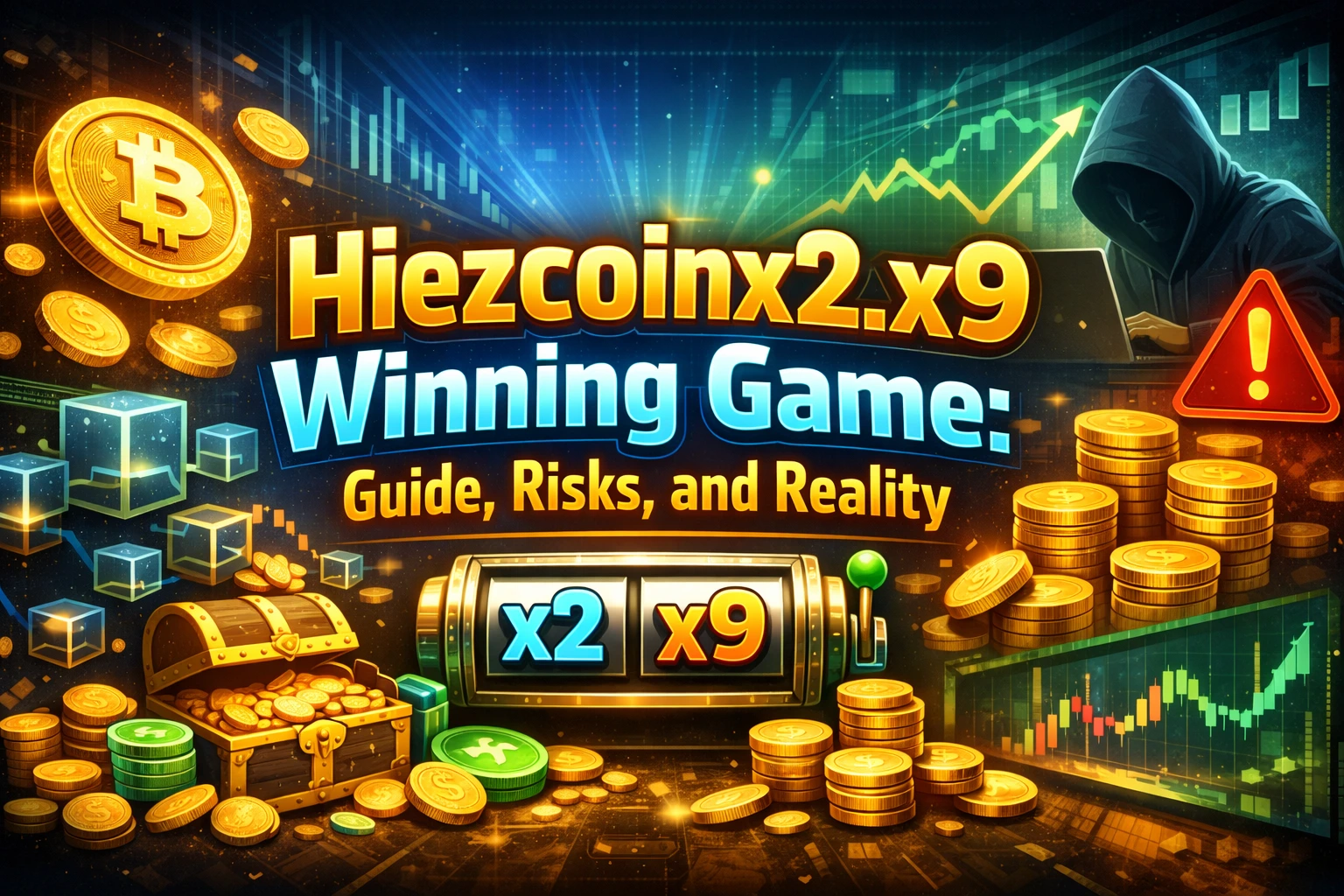
People searching for hiezcoinx2.x9 winning game are usually trying to answer one question fast: is this a real game, and can it actually pay out? Based on what is currently visible online, the phrase is being used mostly by third-party content that describes a blockchain-like or crypto-reward experience with multiplier mechanics. It is not showing up as a widely recognized, clearly verified project with strong official documentation in the search results I reviewed.
That matters because the wording itself can create a strong promise. “Winning game” sounds simple and profitable, but the reality in crypto-related games is usually more complicated. The SEC says crypto asset investments can be exceptionally volatile and speculative, and the FTC regularly warns consumers that scammers exploit crypto hype.
What is Hiezcoinx2.x9 Winning Game?
In the pages currently ranking for this phrase, Hiezcoinx2.x9 is described in a few different ways: as a blockchain-based game, a bonus reward system, or a token-driven multiplier platform. Some pages frame it as “play-to-earn,” while others present it as a high-risk, high-reward mechanic with x2 and x9 style multipliers.
A practical way to understand the term is this: it looks like a crypto-gaming concept rather than a mainstream game title. In blockchain gaming, games may use blockchain technology for administration, asset ownership, or reward tracking, and they are often called crypto games, NFT games, or web3 games.
So, when someone says “hiezcoinx2.x9 winning game,” they are usually talking about one of these ideas:
- a game with token rewards
- a multiplier or bonus mechanism
- a play-to-earn style system
- a speculative crypto reward platform
How It Works
Because there is no strong official documentation in the visible search results, the safest way to explain how it works is to follow the pattern used by the pages discussing it. Those pages commonly describe a loop like this: join, play, complete actions, collect rewards, and then try to increase value through multiplier mechanics or token bonuses.
Step-by-step flow
- You enter the platform or game.
Some descriptions say the experience is built around simple digital play, tasks, or rounds. - You complete an action.
That action may be a level, a round, a task, or another in-game event. Reward systems in blockchain games often tie value to participation or milestones. - You receive a token, point, or multiplier.
The “x2” and “x9” wording suggests amplified rewards, which is a common hook in the pages discussing this keyword. - You decide whether to keep playing, cash out, or reinvest.
That is where risk usually enters. In crypto-style systems, the value of rewards can move quickly, and a promised return is never the same thing as a guaranteed return.
Key Features and Components
If you strip away the marketing language, the recurring features in the current search results are easy to spot.
1. Multiplier-based rewards
The strongest theme is the idea of multiplying rewards through x2 or x9 mechanics. That makes the platform sound exciting, but multiplier language also tends to increase risk because it encourages people to focus on upside instead of downside.
2. Crypto or token integration
Many pages link the concept to tokens, rewards, or digital earnings. In blockchain gaming, tokens or NFTs are often part of the experience, and in some systems players can trade or own in-game assets.
3. Gamified engagement
The phrasing suggests a system designed to keep users active through progress, bonuses, or streaks. That is common in modern digital play, where engagement often matters as much as pure gameplay.
4. High-variance outcomes
Several third-party pages describe it as high-risk or “double-or-nothing” in style. That means results can vary sharply from session to session.
Benefits vs. Drawbacks
A good article should not oversell the upside, especially on a keyword like this. Here is the balanced view.
Potential benefits
- It can be engaging because it combines play with rewards.
- It may appeal to people who already understand crypto, tokens, or web3 systems.
- The multiplier concept can make the experience feel more dynamic than a standard reward app.
Clear drawbacks
- The project name is not backed by a clearly verified official source in the search results I found.
- Crypto-style offers can be speculative and may lack investor protections.
- Scammers often use crypto language, reward promises, and pressure tactics to lure people in.
- “Winning” language can create unrealistic expectations. A reward claim is not proof of sustainability.
Real-World Applications and Use Cases
Even when a specific project is uncertain, the broader pattern behind it is real. Blockchain and crypto gaming can be used in several ways.
Gaming rewards
Players may earn points, tokens, or items by completing tasks or winning rounds. This is a common blockchain gaming model.
Digital asset ownership
Some blockchain games let users own and trade in-game assets in ways that traditional games do not.
Loyalty systems
Reward-style mechanics can also resemble loyalty programs, where participation increases value over time.
Speculative trading behavior
This is the part many users overlook. Some “game” experiences behave less like entertainment and more like speculation, especially when token value becomes the real draw. That is where SEC and FTC warnings become relevant.
Comparison: Traditional Game vs. Crypto Reward Game
A traditional game is usually judged by fun, skill, challenge, and progression. A crypto reward game adds another layer: token value, liquidity, and market risk. That makes it more complex and much less predictable.
In a normal game, a loss usually means you lost a round. In a crypto-style reward game, a loss can mean lost time, lost funds, or exposure to a risky asset with no consumer protections. The SEC has warned that crypto asset investments may be exceptionally volatile and speculative, and the FTC has warned consumers repeatedly about crypto-related scams.
That is why the search term can be misleading. It sounds like a simple winning opportunity, but it may actually describe a mixed system of gameplay, marketing, and financial risk.
Read more: Play Hiezcoinx2.x9 Explained for Beginners (2026)
Common Mistakes and Misconceptions
Mistake 1: Assuming “x2” or “x9” means easy profit
Multiplier labels are attention-grabbing, but they do not guarantee outcomes. High upside usually comes with high risk.
Mistake 2: Believing every crypto game is verified
The current search results show a lot of promotional or SEO-style pages. At least one of them explicitly says it found no verified evidence of an official project or team.
Mistake 3: Ignoring platform credibility
Before trusting any reward platform, look for transparent ownership, a clear team, terms of service, and independent reviews. The FTC and SEC both advise caution around crypto offers and unverified claims.
Mistake 4: Treating hype as proof
A keyword can rank well without representing a real, established product. Search visibility is not the same thing as legitimacy.
Expert Tips and Best Practices
If your goal is to evaluate a term like this properly, use a simple expert-style checklist.
- Check whether there is an official website or verified team.
If the project exists, that should be easy to confirm. One review-style result says no official website or verifiable team information was visible. - Look for real documentation.
Whitepapers, tokenomics, terms, and support pages matter more than catchy marketing. - Separate gameplay from investment claims.
Fun mechanics are one thing. Earning expectations are another. Crypto assets can be speculative and lack investor protections. - Avoid high-pressure behavior.
Scam alerts often involve urgency, promises, or pressure to act quickly. - Start with zero or minimal exposure.
Never risk money you cannot afford to lose in an unverified platform. That is standard caution for speculative digital assets.
Future Trends and Updates
The broader category behind this keyword is likely to keep evolving. Blockchain gaming continues to be discussed as a space where ownership, rewards, and tradable assets can sit inside the same experience. Research and industry explainers describe blockchain games as games built fully or partly with blockchain technology, sometimes called crypto games, NFT games, or web3 games.
At the same time, regulators and consumer-protection agencies are paying more attention to crypto promotion, fraud, and speculative behavior. That means future versions of these platforms will likely face more scrutiny around transparency, disclosures, and risk claims.
For users, that is actually good news. Better scrutiny usually means better questions, clearer terms, and less room for exaggerated promises.
Conclusion
The phrase hiezcoinx2.x9 winning game appears to describe a crypto-style reward or multiplier concept, not a clearly verified mainstream game with strong official backing. The current search results lean heavily on promotional or third-party pages, while consumer and regulatory sources warn that crypto offers can be volatile, speculative, and sometimes scam-prone.
The smart approach is simple: understand the mechanics, verify the source, separate entertainment from investment, and stay cautious with any platform that promises easy wins. In crypto gaming, the best “winning strategy” is usually careful evaluation first, participation second.
FAQs
1. What is hiezcoinx2.x9 winning game?
It appears to be a crypto-style or blockchain-inspired reward concept described mostly on third-party pages, often with multiplier language like x2 or x9.
2. Is hiezcoinx2.x9 a real official project?
I did not find a clearly verified official project page in the search results. At least one source explicitly says there is no verified evidence of an official website or team.
3. Can you really earn money from it?
Some pages claim earning or reward potential, but those claims are not the same as proof. Crypto-related returns can be speculative and risky.
4. Why do people search for “winning game”?
Because the wording suggests rewards, bonuses, and a path to profit. That makes it attractive in search, even when the underlying project is unclear.
5. What are the biggest risks?
The biggest risks are lack of transparency, speculative token behavior, and scam-style promotion. The SEC and FTC both warn consumers to be cautious with crypto offers.
6. Is this the same as blockchain gaming?
It may be using blockchain-gaming language, but that does not prove it is a legitimate or established blockchain game. Blockchain games are a real category; this specific term is not clearly verified.
7. What should I check before joining any similar platform?
Check the official site, team transparency, legal terms, token details, and independent reputation. Avoid any platform that pressures you to deposit quickly or promises guaranteed returns.